Does Earthing Work? What Bare Feet on the Grass Actually Do
You took your shoes off in the park and felt better. Something real happened. Here’s what we know about why, and what’s still an open question.
It’s a Sunday afternoon and you’ve been inside since Friday night. The washing is folded. The emails you promised yourself you wouldn’t open have been opened. Your shoulders are somewhere up near your ears and you can’t say exactly why.
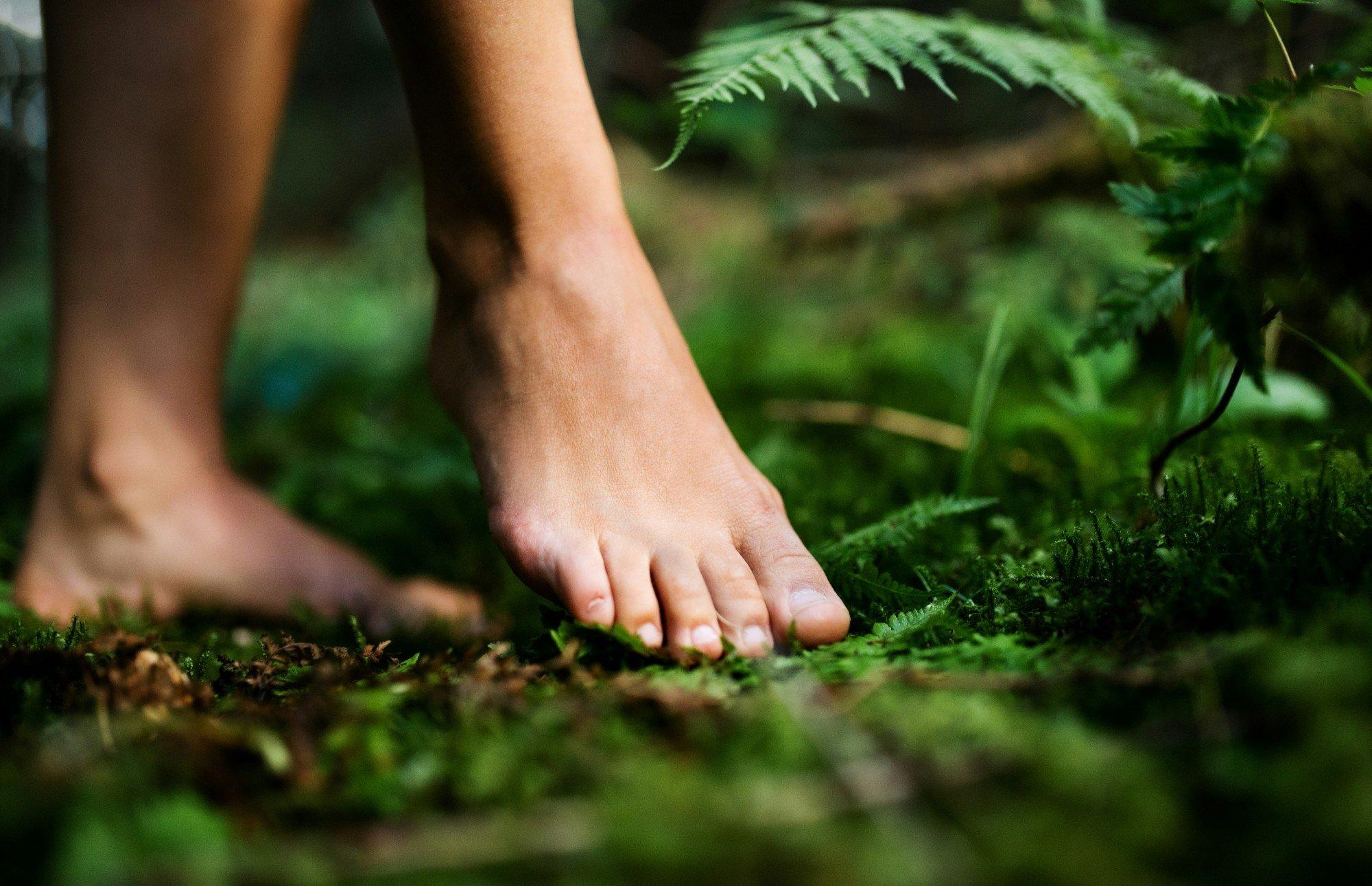
So you walk to the park, and for reasons you don’t examine, you take your shoes off. The grass is cold and slightly wet. There’s moss under the trees that gives a little under your heel. Ten minutes later you feel more like a person.
Here’s the turn. Something real just happened to your nervous system. The question is what, and the honest answer is more interesting than either the sceptics or the sales pages make it sound.
What Earthing Claims
Earthing, or grounding, is the idea that the Earth’s surface carries a mild negative charge, that bare skin on soil or grass lets electrons flow into your body, and that this calms inflammation, steadies your mood and improves your sleep. The idea was popularised by Clint Ober, who published a book about it in 2010, and it has since grown into a small industry of grounding sheets, mats and patches for people who can’t spend their days barefoot in a paddock.
Australians have taken to it. Reels of people standing barefoot on the lawn are everywhere, and the ABC ran an explainer on the physics in late 2024 because so many people were asking.
The physics part is settled. Your body conducts electricity and picks up static. Touching the ground discharges it, the same way touching a car door does. Whether that discharge reaches into inflammation and mood is the part the research is still working out.
What the Earthing Studies Actually Show
There are a couple of dozen studies, and they’re early rather than wrong. Most involve ten to thirty people. Some have no sham condition, so nobody was lying on an unplugged sheet for comparison. Several were funded by companies that sell the products, which is normal for a young field and also a reason to read them with care.
Within those limits, a few findings keep turning up. People sleeping grounded reported falling asleep faster and waking less often. Night-time cortisol, the stress hormone, settled into a more regular rhythm in a small group measured over eight weeks. Self-reported pain and muscle soreness came down. A handful of blood samples showed changes in how red cells clump. None of this has been repeated at a size that would settle it, and all of it is worth a proper trial.
I’ve been sent a grounding sheet, and I’m sleeping on it as I write this. I like it. I can’t tell you yet whether it’s the sheet or the earlier bedtime that tends to come with trying something new, and to be fair, neither can the research. That’s the honest position: promising, unproven, and cheap enough to test on yourself.
The sheet might be doing something. The park is definitely doing something.
What Was Actually Happening in the Park
Go back to the Sunday afternoon. You weren’t just barefoot. You were outside, in daylight, under trees, moving slowly, not looking at a screen, and paying attention to something that wasn’t your inbox. Each of those has evidence behind it, and that evidence is a good deal sturdier than anything about electrons, for now.
Start with the biggest study. In 2019 Mathew White and colleagues looked at nearly 20,000 people across England and asked how much time they’d spent in parks, woods, beaches and countryside in the past week. Below about two hours, there was no difference in how people rated their health and wellbeing. At two hours and over, they were noticeably more likely to report both as good. It didn’t matter whether that was one long walk or a few short ones. This was a survey, so it shows an association rather than a cause, but it held for people in poor health and people in the least green suburbs too.
Closer to home, a Brisbane team led by Danielle Shanahan found in 2016 that people whose visits to green space averaged thirty minutes or more a week had lower rates of depression and high blood pressure than those who went for less. And a large New South Wales study of more than 46,000 adults, followed over six years, found that living with at least 30 per cent tree canopy nearby was linked with lower odds of developing psychological distress. Grass on its own didn’t do it. Trees did.
Why Trees Quiet the Loop
The mechanism most likely to matter for a counselling client isn’t in the blood. It’s in attention.
When you’re anxious or low, your mind runs a loop. The same worry, the same conversation, the same replay of what you should have said. Psychologists call it rumination. It’s tiring, it feels productive, and it isn’t.
In 2015 a Stanford team sent people on a 90-minute walk. Half walked through grassland with oak trees. Half walked along a busy road. Before and after, each person rated how much they were stuck in that loop, and had a brain scan. The nature walkers came back ruminating less, and a region of the brain associated with brooding had gone quieter. The road walkers showed no change. Thirty-eight people, so a small study, but it measured the thing that matters.
Then there’s the stress hormone again. A Michigan team asked people to take what they called a nature pill, ten minutes or more outside somewhere that felt natural to them, at least three times a week for eight weeks, with no phone, no exercise and no conversation. They swabbed saliva before and after. Cortisol dropped, and it dropped most efficiently in the first twenty to thirty minutes. After that it kept falling, just more slowly.
None of this needed bare feet. What it needed was the outdoors, a bit of time, and the attention going outward instead of inward.
So Why Did the Bare Feet Help?
Maybe part of it was electrical. We’ll know more in a few years. But most of it we can already account for, and it starts with the fact that bare feet make you pay attention. The soles of your feet are packed with nerve endings, and they spend most of their lives sealed inside a shoe reporting nothing. Put them on wet grass and the signal is sudden and detailed: cold, texture, the uneven ground, the moss giving way. For a few minutes your brain has to attend to that, and it can’t attend to that and the loop at the same time.
This is the same principle behind the grounding exercises counsellors teach for panic, the five-things-you-can-see kind. It works through the senses. The lawn is simply a very good sensory exercise that happens to come with trees, daylight and a walk attached, and possibly a few electrons as a bonus.
A dry footnote: walking barefoot is also fine for most feet and mildly good for balance, as long as you can see what you’re stepping on. In an inner-city park that’s worth checking.
What Helps
- Aim for the dose the research found, which is two hours a week outside, in any pieces. Half an hour is already worth something
- Trees beat grass. A street with canopy, the Carlton Gardens, Princes Park, the river path. A flat oval under full sun isn’t the same thing
- Leave the phone in your pocket. The cortisol study excluded screens and conversation on purpose, because the point is where your attention goes
- Use your feet, your hands or your face as the sensory anchor. Shoes off if you want. Bark, water or wind do the same job if you don’t
- Walk slowly or sit. This isn’t exercise, which has its own strong evidence, and you can do both
- If you’ve got a grounding sheet or mat, treat it as an experiment. Keep the same bedtime, note your sleep for a fortnight, and see. Just don’t let it stand in for going outside
Try it now · 30 seconds
Wherever you are, put both feet flat on the floor and press down slightly. Notice the temperature, the texture through your socks, which part of each foot takes the weight. Keep your attention there for the full half minute. That shift, from the loop to the soles of your feet, is the part of earthing we can already explain.
A Realistic Expectation
Half an hour under trees won’t treat depression, and it won’t undo a week of five hours’ sleep. The studies show modest shifts in mood, stress hormones and rumination, in people who did it regularly. Modest and regular is how most things that work actually work.
What it does reliably is interrupt the loop for a while, and give your nervous system a stretch of time when nothing is asking anything of it. For a lot of people that’s the first calm they’ve felt all week, which is why the barefoot videos get the response they do. The feeling is real. The explanation is still being written, and the park doesn’t need to wait for it.
None of this is a diagnosis, and it’s not a substitute for individual assessment. If the loop is running most days and the park isn’t touching it, that’s worth talking through, and the first 15-minute call is free. Stabilise is available in Carlton, Melbourne and online.
Two free guides. Spot the signs of nervous system dysregulation, and settle your body in under 90 seconds.