Soft Fascination: Why You Can’t Stop Watching the Fish
You stopped at a pond you weren’t planning to stop at and lost four minutes to a fish. That wasn’t nothing. It was the closest thing to presence most of us get.
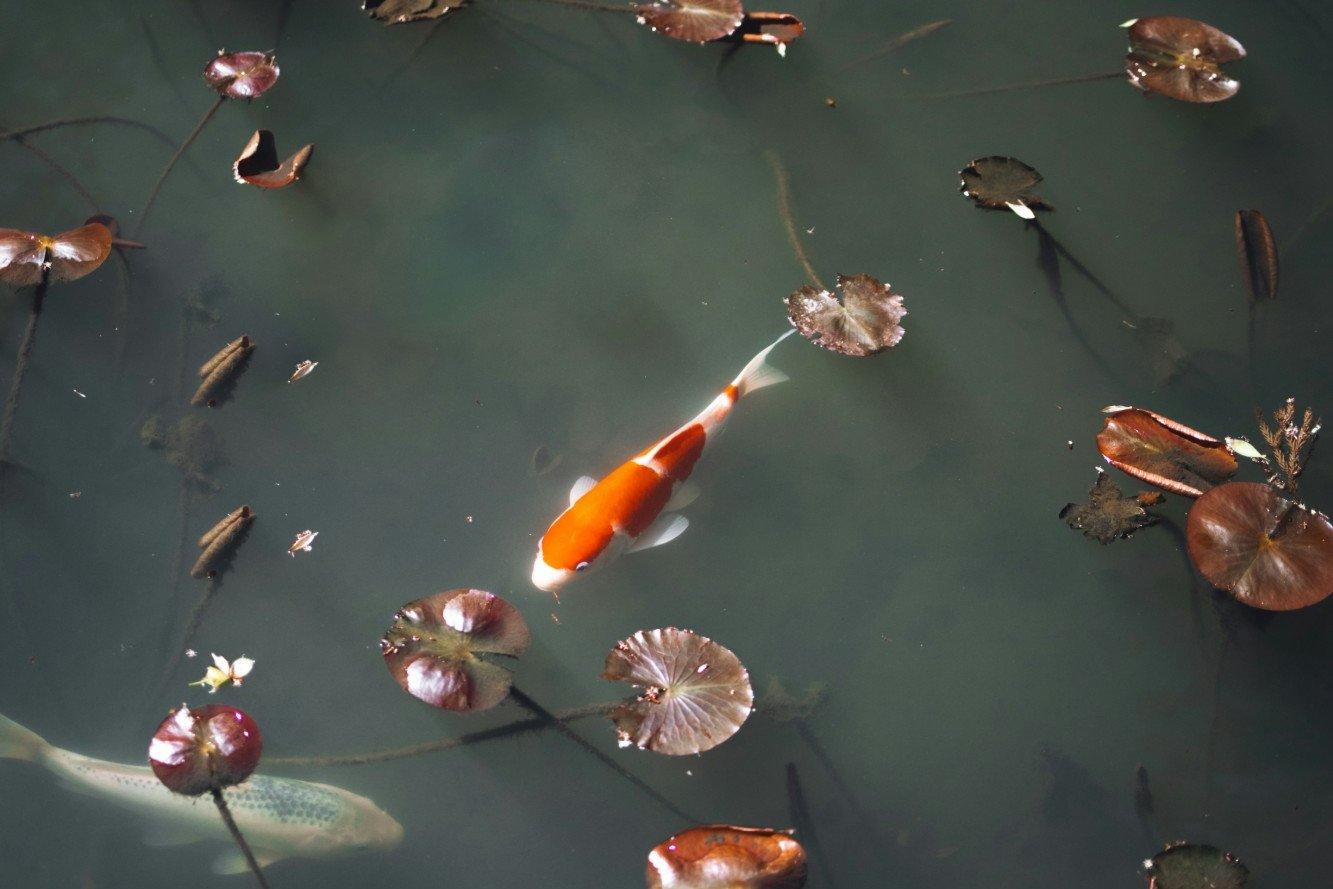
You’re cutting through the gardens because it’s quicker, and there’s a pond you’ve walked past fifty times. Today, for no reason you can name, you stop. There’s an orange and white koi moving under the lily pads, slow, not going anywhere. You watch it turn. You watch it turn again.
When you look up, four minutes have gone. Your phone is in your hand and you didn’t check it. The thing you were chewing over on the way in, the message you haven’t answered, the conversation from Tuesday, is still there, but it has gone quiet, the way a radio does in the next room.
Here’s the turn. That wasn’t a lapse. For most people it’s the closest thing to presence they get all week, and it took no effort at all. Which raises an awkward question about why presence is supposed to be so hard.
Where Your Mind Actually Is
In 2010 two Harvard psychologists, Matthew Killingsworth and Daniel Gilbert, built a phone app that pinged people at random moments through the day and asked three things. What are you doing? Is your mind on it? How do you feel? More than two thousand people answered, tens of thousands of times.
The answer to the second question was no about 47 per cent of the time. Whatever people were doing, working, commuting, eating, talking to a friend, their minds were somewhere else for close to half of it. And they were less happy when they were elsewhere, even when the elsewhere was pleasant. Daydreaming about the weekend felt worse than paying attention to the dishes.
One more detail matters. The researchers could see the order of events, because the pings were spread through the day. A wandering mind came before a dip in mood, not after it. The drifting wasn’t a symptom of feeling flat. It was doing some of the work.
If you’ve ever been told to be more present and felt faintly accused, this is the context. You’re not unusually scattered. You’re average. Half of everyone’s life is happening while they’re somewhere else.
Why Trying to Be Present Feels Like Work
The standard advice is to meditate, and some people take to it. A lot of my clients don’t. They sit down, close their eyes, and the loop gets louder. They decide they’re bad at it and add that to the list.
Here’s what’s going on. Holding your attention on one thing by choice, a breath, a spreadsheet, a conversation you’d rather leave, uses a capacity psychologists call directed attention. It’s a muscle, and it tires. By Thursday afternoon it’s spent. Meditation asks that tired muscle to do the hardest thing it does, which is hold still on nothing in particular while everything else pulls. Of course it hurts.
The koi didn’t ask that muscle to do anything. That’s the difference, and there’s a name for it.
Soft Fascination
Rachel and Stephen Kaplan were a husband and wife team at the University of Michigan who spent decades asking why time in nature leaves people feeling restored. Their answer turned on two kinds of attention. Some things grab you. A siren, a notification, a screen with the volume up. They call this hard fascination, and it fills the whole frame. You can’t think while a car alarm is going, but you can’t rest either.
Other things hold you lightly. Water moving. Fish under lily pads. Flames in a fireplace. Leaves doing what leaves do in wind. Clouds. These are interesting enough that your attention goes to them on its own, and undemanding enough that there’s room left over. That room is where the tired muscle recovers. The Kaplans called this soft fascination, and they argued it’s the thing that makes nature restful, not the fresh air.
Notice what it doesn’t require. No technique. No posture. No deciding to be present. Soft fascination is presence that happens to you, because you put yourself in front of something that does the holding.
The fish aren’t asking anything of you. That’s the whole trick.
The Aquarium Experiment
In 2015 a team in Plymouth, in the south of England, got an unusual chance to test this. The National Marine Aquarium was restocking its largest tank, and for a few weeks the number of fish in it went from almost none to full. The researchers sat people in front of the same glass at each stage, wired up for heart rate and blood pressure, and asked how they felt before and after.
Within a few minutes of sitting down, heart rate and blood pressure fell. That happened even when the tank held little more than water and rock. As the fish went in, something else shifted. People watched for longer without being asked, and their mood lifted more. The more there was to softly watch, the better they felt. Nobody was told to relax. They just sat in front of something that moved slowly and had nothing to do with them.
This is why dentists put a fish tank in the waiting room, and why it works despite being a cliché.
What This Means If Your Mind Won’t Sit Still
In the counselling room, the people who say they can’t be present are usually people whose directed attention has been running flat out for months. Work, kids, a parent who’s unwell, a relationship that takes managing. The last thing that mind needs is another task called mindfulness.
What it needs is a few minutes a day in front of something softly fascinating, often enough that the muscle gets a rest before it’s asked to lift again. Presence, for these clients, isn’t a skill they’re missing. It’s a condition they haven’t set up.
It also explains something people find confusing. They can’t sit through a ten-minute meditation, but they can lose half an hour watching a fire, or the dog, or the surf. They assume the first counts and the second doesn’t. The research says it’s closer to the other way round.
What Helps
- Find your fish. Moving water, flames, washing on a line, a tram going past the window, the dog asleep. Anything that moves slowly and wants nothing from you
- Five to ten minutes is a dose. The aquarium study saw changes inside five. You don’t need a retreat
- Don’t turn it into a practice. The moment you’re checking whether you’re doing it right, directed attention is back on the job. Just look
- When the loop comes back, and it will, let the water take it again. You haven’t broken anything
- Phone face down, or in a pocket. A screen is hard fascination and it will win every time
- In Melbourne: the lake in the Royal Botanic Gardens, the Fitzroy Gardens pond, the Yarra from a bench at Birrarung Marr, or the bay at any time of day
Try it now · 30 seconds
Find something near you that’s moving and isn’t a screen. A tree outside the window, steam off your cup, the shadow of a curtain. Watch it for the full half minute without naming what it’s doing. If your mind drifts, let the movement pull it back. That pull, not your effort, is the part that rests you.
A Realistic Expectation
Ten minutes by a pond won’t fix a mind that’s been running at capacity for a year, and it won’t resolve the thing the loop is about. The studies show modest drops in heart rate and blood pressure and a lift in mood, in the minutes around the watching. It’s a rest, not a repair.
But rest is what the tired muscle needs before it can do the harder thing, which is turn and look at what it has been avoiding. That turn is where counselling comes in, and it goes better when you arrive with something left.
None of this is a diagnosis, and it’s not a substitute for individual assessment. If your mind is elsewhere most of the day and the pond isn’t touching it, that’s worth talking through, and the first 15-minute call is free. Stabilise is available in Carlton, Melbourne and online.
Two free guides. Spot the signs of nervous system dysregulation, and settle your body in under 90 seconds.