Why You Want the Seat Facing the Door
You take the seat with your back to the wall before you’ve thought about it. A geographer worked out why, and it explains more about anxiety than it should.
You walk into a cafe on Lygon Street with a friend and there are two free tables. One is against the back wall, facing the room and the door. The other is in the middle, with your back to the window and the footpath. You take the wall. You didn’t decide to. You were sitting down before the question came up.
Your friend takes the other chair and doesn’t seem to notice. You notice. If the wall seat had been taken, you’d have spent the first ten minutes with your shoulders up, glancing over your shoulder at nothing, half hearing what she said.
Here’s the turn. The seat isn’t a quirk. Your body picked it for you, using a rule that’s older than cafes. The interesting question isn’t why you want that chair. It’s how much it’s costing you to need it.
A Geographer’s Idea About Where to Stand
In the 1970s a geographer called Jay Appleton asked a question nobody in his field was asking: why do some places feel good to be in and others don’t, before we’ve thought about them at all? His answer was that we’re still, underneath, an animal checking a landscape. We like to see without being seen. We want a clear view out, which he called prospect, and a protected place to look out from, which he called refuge. Give a person both at once and they relax. Take either one away and something in them stays on duty.
You can see it in how people fill a room. Researchers who watched diners choose tables found the ones against walls and in corners went first, and that people sitting at those tables stayed longer. Nobody at those tables could have told you why. They’d just have said the seat felt better.
It’s also why the big open-plan office feels wrong in a way that’s hard to argue. All prospect, no refuge. Everyone can see everyone, and there’s nowhere to put your back.
The Curtain Is Doing the Same Job
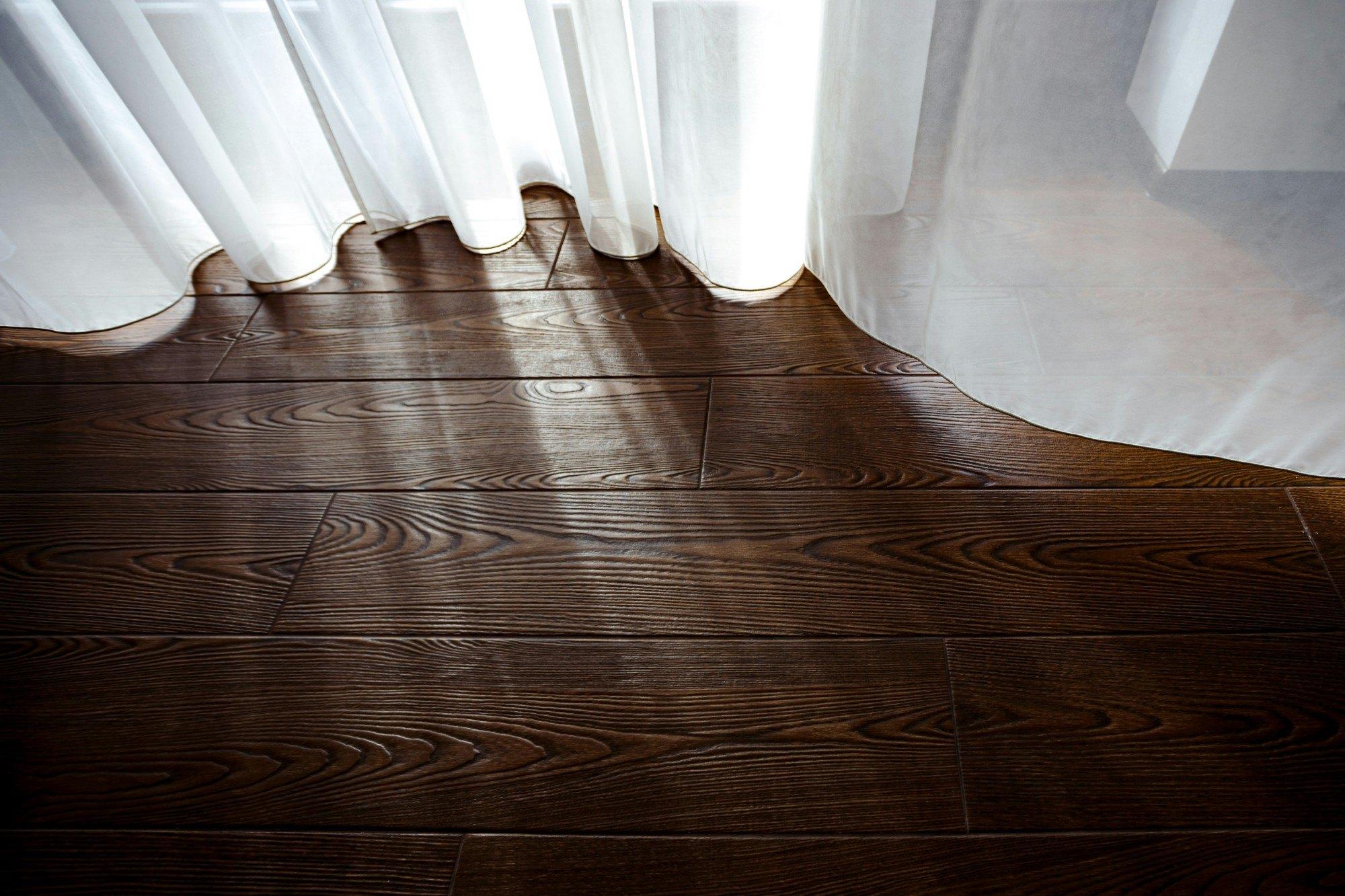
Look at the photo above this post. Sheer curtains, a bright window, a bare floor. That curtain is a refuge device. You can stand behind it in the afternoon and watch the street, and the street can’t watch you. Net curtains hung in front windows across Melbourne for most of the last century for exactly that reason, and nobody called it a theory.
Your home is full of these choices, most of them made without a word. The side of the bed you sleep on. The chair you take at dinner. Where you put your desk. Many people, if they’re honest, have their chair angled so they can see the door, and feel vaguely uneasy in a room where they can’t.
Everybody wants to see without being seen. The difference is how badly, and what you’ll give up to get it.
Where Anxiety Comes In
For most people prospect and refuge is a preference. You take the wall if it’s free and get on with your coffee if it isn’t. For some people it’s a rule, and that’s usually where I meet them.
A nervous system that’s had a hard year, or a hard childhood, runs its threat check more often and sets the bar lower. That’s not a defect. It learned that being caught unaware had a price, so it stopped being caught. Psychologists call the result hypervigilance, which is a long word for a body that doesn’t clock off. On a cafe chair it looks like this: the seat matters more than the company. You hear the door more than your friend. You leave tired from a coffee.
The tell is cost. A preference costs you nothing. A rule costs you the conversation you only half had, the restaurant you didn’t go to because you’d been there and the good tables are always gone, the dinner party you sat through with your back to the hallway, counting the minutes.
If that’s recognisable, it’s worth saying that a body which does this has usually got a reason, and I’ve written before about what trauma actually is and how often people have it without the word.
What Helps
The first thing is to stop apologising for the preference. Take the wall. Ask to swap. Say it plainly if you like: I settle better facing the room. People are less bothered than you think, and the ten minutes of shoulders-up you’re saving is worth the small awkwardness.
Then notice what happens once your back is covered. With the body’s one question answered, attention comes free, and you can feel it come back. That’s the whole point of refuge. It isn’t hiding. It’s the condition under which you can actually look at anything else.
At home, give yourself one room that’s set up properly. Desk facing the door. Chair where you can see the hallway. Sheer curtains in the window you sit near. People resist this because it feels like giving in to the anxiety. It isn’t. It’s lowering the baseline so the anxiety has less to work with the rest of the day.
And when the rule has spread to every room, when you’re checking exits in your own kitchen, that’s the point where it stops being about furniture. The body is running an old programme on a situation that ended a while ago, and talking is one of the ways it finds out the situation ended.
- Take the wall seat without apology. The cost of asking is smaller than the cost of not
- Notice the moment your back is covered. That’s attention coming back, and you can learn what it feels like
- Set up one room at home so the body’s question is already answered when you walk in
- Tell the difference between a preference and a rule by what it costs you
- If every room has become a room to watch, that’s a nervous system doing its job too well, and it can be worked with
Try it now · 30 seconds
Wherever you’re sitting right now, notice what’s behind you and what you can see. Don’t change anything. Just ask whether your body chose this spot, and what it was looking for when it did. Then notice how much of your attention is free, and how much is still on the door.
A Realistic Expectation
You won’t stop wanting the seat facing the door. Neither will I, and neither did Appleton, who wrote a whole book about it and presumably still took the corner table. The preference is human and it’s staying.
What changes, with time and sometimes with help, is the grip. The seat goes back to being a thing you’d like rather than a thing you need. You take the middle table some days and find the room doesn’t collapse. The door is still there. You just stop hearing it.
None of this is a diagnosis, and it’s not a substitute for individual assessment. If you’ve read this and recognised a rule rather than a preference, that’s worth talking through, and the first 15-minute call is free. Stabilise is available in Carlton, Melbourne and online.
Two free guides. Spot the signs of nervous system dysregulation, and settle your body in under 90 seconds.