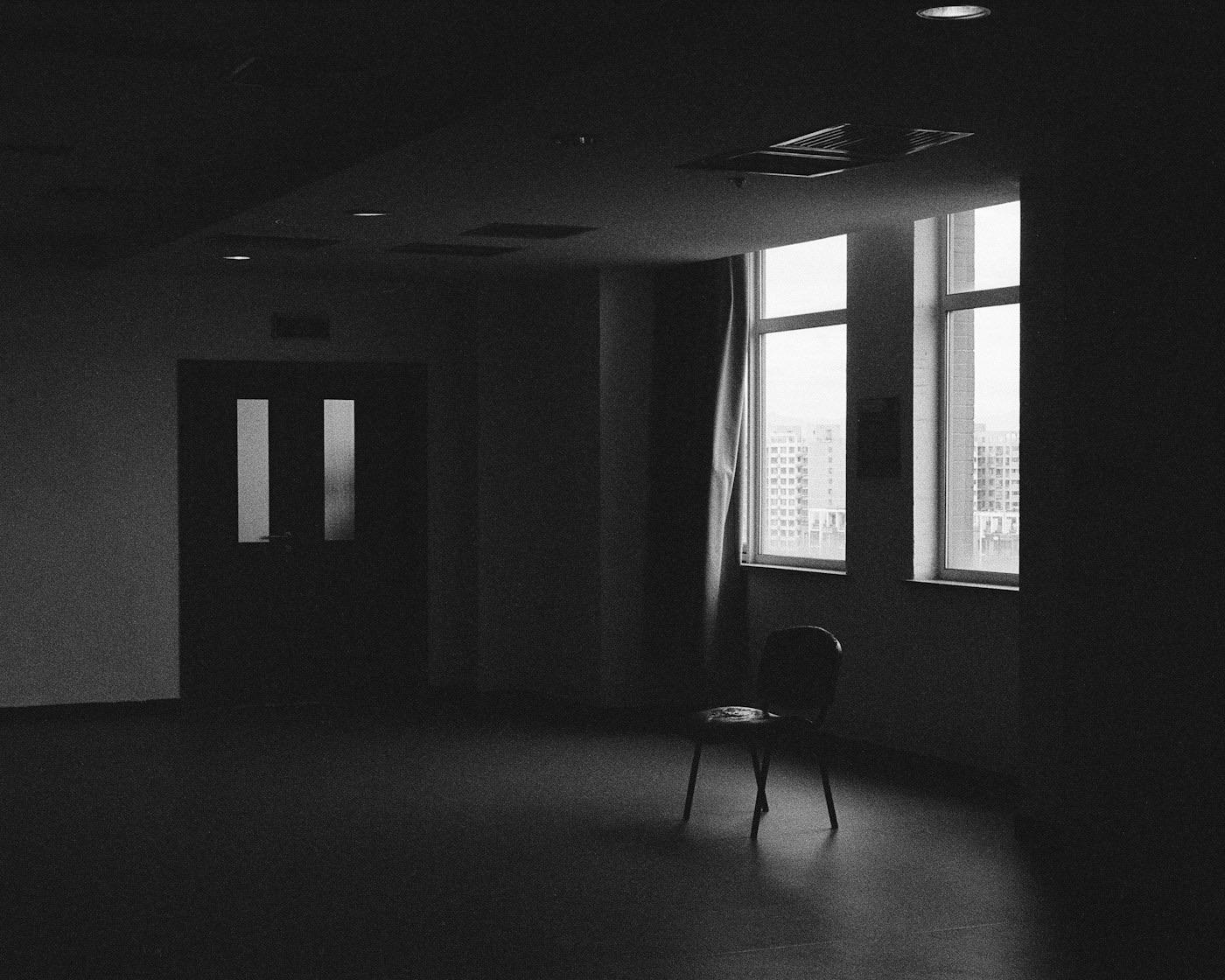
Depression is often described as persistent sadness, but many people experience it differently: as numbness, as a heaviness that makes everything harder, as an inability to feel pleasure in things that used to matter, or as a quiet sense of disconnection from their own life. Some people describe feeling like they’re watching their life from behind glass.
These are all valid experiences of depression. They’re also all things that respond to support, and none of them mean you’re broken or beyond help.
I draw on Acceptance and Commitment Therapy (ACT), polyvagal theory and somatic awareness to work with depression at both the physiological and psychological level. Rather than trying to force positive thinking, ACT helps you change your relationship to difficult thoughts and feelings and reconnect with what matters to you.
Sessions also work with the nervous system. Depression often involves a dorsal vagal state, a kind of shutdown the body uses when it has been under sustained stress. Understanding this physiologically can be clarifying and, for many people, relieving. It shifts the experience from what’s wrong with me to this is what my system learned to do, and that shift makes it something you can actually work with.
Getting here was the hard part. The first hour asks very little of you. I’ll want to know what the days look like, what’s gone flat, and whether you’re sleeping. I’ll explain what the heaviness is doing in your nervous system, because shutdown makes more sense to most people than chemical imbalance, and gives us something to work with.
If talking is too much, we can do a short grounding exercise instead and talk next time.
We start with the body: light, movement, one small thing a day that isn’t about fixing you. Then the ACT work, which is about doing the thing before you feel like it, because with depression the feeling comes after the action, not before. Over weeks the window widens: a morning that was bearable, a conversation you didn’t dread.
Some weeks will be worse. That’s not failure; it’s the shape of it. We keep going.
Chloe, 27, hadn’t opened her blinds in three weeks when she booked online from bed. Our first session was twenty minutes long and mostly silence, and that was fine. By the third session she’d opened the blinds. By the second month she was walking to the corner shop most days and had seen her GP. By the fourth she’d gone back to work two days a week. Chloe is a composite, not a real client.
If your depression is severe or hasn’t responded to therapy, it’s worth speaking to your GP. Medication and counselling work well together for many people. I can work alongside any medical treatment you’re receiving and can refer you to appropriate professionals if needed.
Sessions are available in person at 167 Drummond Street, Carlton VIC 3053, or online from home. When depression makes leaving the house difficult, online sessions remove that barrier entirely.